

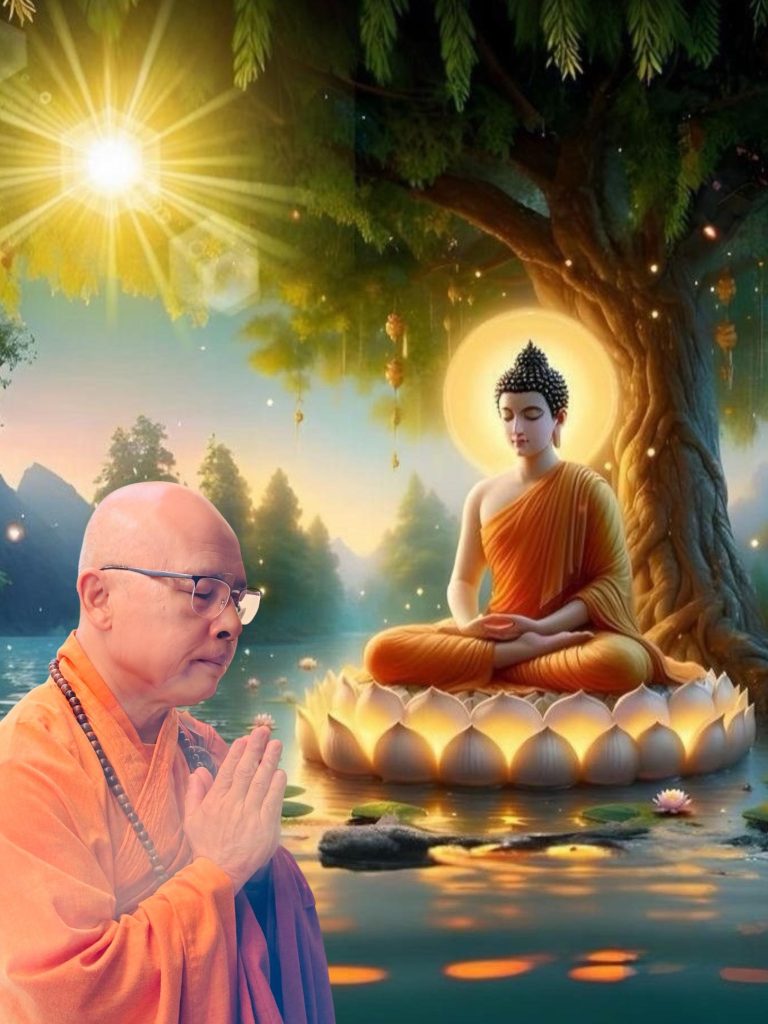
Ý NGHĨA NGÀY PHẬT THÀNH ĐẠO
CON ĐƯỜNG DIỆT KHỔ, TRUNG ĐẠO VÀ NIẾT-BÀN
Hoà Thượng Thích Viên Lý
THE MEANING OF THE BUDDHA’S ENLIGHTENMENT
Most Venerable Dr. Thích Viên Lý
THE PATH OF THE CESSATION OF SUFFERING,
THE MIDDLE WAY, AND NIRVĀṆA
Nam Mô Bổn Sư Thích Ca Mâu Ni Phật
Kính thưa quý Thiện tín,
Hôm nay chúng ta kỷ niệm ngày Đức Phật thành đạo – một ngày thiêng liêng của Phật giáo. Nhưng nếu chỉ xem đây là một biến cố lịch sử hay một ngày dành cho lễ nghi, thì ý nghĩa quan trọng của ngày này rất dễ bị quên lãng.
Bởi vì, Đức Phật thành đạo không chỉ để trở thành một Đức Phật, mà để chỉ ra cho con người một con đường chấm dứt khổ đau.
Và câu hỏi rất lớn đặt ra cho chúng ta hôm nay là:
Khổ đau có thật sự chấm dứt được không?
Hay con người chỉ có thể chịu đựng khổ đau suốt đời?
Chúng ta đang sống trong một thời đại mà khổ đau mang nhiều hình thức mới:
– áp lực tinh thần
– lo âu về tương lai
– đổ vỡ gia đình
– cô đơn ngay giữa đám đông
Con người hôm nay không thiếu phương tiện sống,
nhưng lại thiếu khả năng hiểu và chuyển hóa chính tâm mình.
Ngày Phật thành đạo, vì vậy, không phải là câu chuyện của quá khứ, mà là một thông điệp sống cho hiện tại.
BÀI HỌC THỨ NHẤT
ĐỨC PHẬT THÀNH ĐẠO VÌ DÁM NHÌN THẲNG VÀO KHỔ ĐAU
Đức Phật không thành đạo bằng cách chạy trốn khổ đau.
Ngài cũng không thành đạo bằng cách cầu xin một thế giới không còn đau khổ.
Ngài thành đạo vì Ngài nhìn thẳng vào khổ đau, thấy rõ khổ đau đúng như thật và biết cách tận trừ khổ đau.
Trong đời sống hằng ngày, chúng ta cũng tiếp xúc với đau khổ mỗi ngày, nhưng phần lớn là không thấy rõ đau khổ.
– Khi giận người thân, ta nghĩ “tại họ làm tôi khổ”, mà không thấy sự chấp ngã đang vận hành.
– Khi lo cho con cái, ta nghĩ “vì thương”, mà không thấy sự sợ hãi và dính mắc đang sinh ra khổ.
– Khi buồn, ta tìm cách khoả lấp u buồn bằng bận rộn hay giải trí, nhưng khổ chỉ lắng xuống rồi lại trỗi dậy.
Đức Phật dạy rất rõ: Không thấy khổ như thật thì không thể đoạn tận khổ.
Chính tuệ tri khổ là nền tảng đầu tiên của con đường Diệt khổ.
BÀI HỌC THỨ HAI
DIỆT KHỔ LÀ ĐOẠN TẬN NGUYÊN NHÂN, KHÔNG PHẢI CHỈ LÀ CHỊU ĐỰNG
Ở đây, chúng tôi xin nói cho thật rõ để tránh sự hiểu lầm:
Theo lời Đức Phật dạy, giải thoát rốt ráo là chấm dứt hoàn toàn khổ đau, là đoạn tận tham, sân, si… phiền não, là chứng nhập Niết-bàn tịch diệt.
Đức Phật không dạy chúng ta chỉ sống chung với khổ.
Nhưng con đường đi đến sự chấm dứt rốt ráo ấy là một tiến trình tu tập, bắt đầu từ việc thấy rõ khổ ngay khi nó vừa khởi sinh.
Ví dụ rất gần:
– Hai người cùng bị mất tiền: một người sụp đổ, oán trách, đau khổ kéo dài; một người đau nhưng không tuyệt vọng. Hoàn cảnh giống nhau, nhưng khổ thì khác nhau, vì tham ái sai biệt.
Khi tham ái và vô minh bị đoạn trừ, khổ không còn gốc để sinh khởi. Đó chính là Diệt đế.
BÀI HỌC THỨ BA
THÀNH ĐẠO LÀ THẮNG CHÍNH MÌNH – ĐOẠN TẬN GIẶC PHIỀN NÃO
Trong đêm thành đạo, Đức Phật đối diện với Ma vương.
Nhưng ma lớn nhất không ở bên ngoài, mà là tham, sân, si trong chính tâm mình.
– Khi giận mà không biết mình đang giận, ta bị phiền não sai khiến.
– Khi lo mà không biết mình đang lo, ta bị khổ đau điều khiển đời sống.
Giải thoát không phải là đẩy khổ ra xa, mà là đoạn tận những nguyên nhân khởi sinh khổ đau trong tâm. Khi tham, sân, si không còn, thì khổ không còn sinh khởi nữa.
BÀI HỌC THỨ TƯ
TRUNG ĐẠO – CON ĐƯỜNG BÁT CHÁNH ĐẠO ĐƯA ĐẾN DIỆT KHỔ
Đức Phật đã từng đi qua hai cực đoan:
– sống trong nhung lụa
– ép xác khổ hạnh
Cả hai đều không đưa đến Niết-bàn.
Người thời nay cũng vậy:
– Có người làm việc đến kiệt quệ, tưởng đó là thành công
– Có người buông thả, tưởng đó là tự do
Cả hai đều đang gieo thêm hạt giống đau khổ.
Trung đạo mà Đức Phật dạy không phải là dung hòa,
mà là Bát Chánh Đạo – con đường gồm có chánh kiến, chánh tư duy, chánh ngữ, chánh nghiệp, chánh mạng, chánh tinh tấn chánh niệm và chánh định – đưa đến tuệ giác và đoạn tận phiền não.
BÀI HỌC THỨ NĂM
CHÁNH NIỆM LÀ NHÂN, TUỆ GIÁC LÀ QUẢ
Chánh niệm trong Phật pháp không phải để thư giãn, mà để thấy các pháp như chính nó đang là.
– Khi cơn giận vừa khởi mà được thấy rõ, nó không kịp phát triển thành sân hận.
– Khi nỗi lo vừa khởi mà được nhận diện, nó không biến thành tuyệt vọng.
Chánh niệm dẫn đến tuệ giác.
Tuệ giác dẫn đến ly tham.
Ly tham dẫn đến giải thoát.
BÀI HỌC THỨ SÁU
THẤY VÔ THƯỜNG ĐỂ ĐOẠN TẬN CHẤP THỦ
Nhiều người khổ vì nghĩ:
“Tôi sẽ khổ mãi như thế này.”
Đức Phật thành đạo vì Ngài thấy rõ: Mọi pháp hữu vi đều vô thường.
Khi vô thường được thấy bằng tuệ giác,
chấp thủ được buông xả vì chính chấp thủ mới là gốc sinh khổ.
BÀI HỌC THỨ BẢY
GIẢI THOÁT LÀ SỐNG HIỀN, TỪ BI HƠN TRÊN CON ĐƯỜNG ĐẠO
Sau khi thành đạo, Đức Phật không ngồi yên dưới cội Bồ-đề. Ngài đứng dậy và đi vào cuộc đời.
Giác ngộ không phải để hơn người, mà để chấm dứt khổ cho mình và đoạn tận khổ đau cho người khác.
KẾT LUẬN
DIỆT KHỔ LÀ CÓ THẬT – NIẾT-BÀN LÀ CỨU CÁNH GIARI THOÁT
Ngày Phật thành đạo là ngày xác chứng một sự thật lớn lao: khổ đau có thể chấm dứt.
Đức Phật không dạy chúng ta chỉ chịu đựng khổ đau,
mà dạy con đường Trung đạo đưa đến đoạn tận khổ đau và chứng nhập Niết-bàn thanh tịnh.
Nếu hôm nay, chúng ta bắt đầu thấy khổ – đoạn trừ nhân khổ – đi đúng Bát Chánh Đạo, thì ánh sáng thành đạo không phải là chuyện của quá khứ, mà là con đường thành đạo đang mở ra cho chính chúng ta.
Mỗi khi khổ khởi lên, hãy dừng lại, nhìn thẳng vào nó, để thấy rõ chấp thủ nào đang sinh khổ trong tâm mình.
Ví dụ rất đơn giản trong đời sống hằng ngày: Có ai đó nói với mình một câu không dễ nghe. Ngay lúc đó, khổ khởi lên.
Theo thói quen cũ, ta phản ứng ngay: bực bội, cãi lại, hoặc mang nỗi khó chịu đó về nhà.
Nhưng nếu nhớ câu thực hành này, ta dừng lại một chút
và nhìn thẳng vào nỗi khổ đang có mặt. Khi nhìn kỹ, ta thấy:
không phải câu nói kia làm ta khổ, mà là sự chấp vào cái tôi bị tổn thương.
Ngay giây phút thấy được chấp thủ ấy, khổ bắt đầu đánh mất sức mạnh. Đó là Pháp đang vận hành.
Đức Phật thành đạo không chỉ để tự an, mà còn để chỉ bày con đường giải thoát khổ đau cho muôn loài; do vậy nếu chính ta chưa thật sự an, thì khó có thể đem lại an lạc đích thực cho người khác, vì thế nhân ngày Lễ Thành Đạo, xin mỗi chúng ta hãy tinh tấn tu tập và khuyến thỉnh mọi người tu tập để thành tựu một cách viên mãn sự tự giác và giác tha.
THE MEANING OF THE BUDDHA’S ENLIGHTENMENT
Most Venerable Dr. Thích Viên Lý
THE PATH OF THE CESSATION OF SUFFERING,
THE MIDDLE WAY, AND NIRVĀṆA
Namo Tassa Bhagavato Arahato Sammā Sambuddhassa
(Homage to the Blessed One, the Worthy One, the Fully Enlightened One)
Venerable devotees and Dharma practitioners,
Today we solemnly commemorate the Day of the Buddha’s Enlightenment, a sacred occasion in the Buddhist tradition. If this day is regarded merely as a historical milestone or a ritual observance, its profound doctrinal significance may easily be overlooked.
For the Buddha attained enlightenment not simply to become the Buddha,
but to reveal to humanity a definitive path leading to the cessation of suffering.
Accordingly, a fundamental question arises for all of us:
Can suffering truly be brought to an end,
or is the human condition destined to endure suffering indefinitely?
We live in an era in which suffering manifests in increasingly complex forms:
psychological pressure, anxiety about the future, the disintegration of family structures, and a pervasive sense of loneliness even amidst social abundance.
Modern society is rich in material resources, yet often impoverished in the capacity to understand, discipline, and transform the mind.
The Day of the Buddha’s Enlightenment, therefore, is not a relic of the past, but a living and urgent message for the present age.
I. THE BUDDHA ATTAINED ENLIGHTENMENT BY DIRECTLY CONFRONTING SUFFERING
The Buddha did not attain enlightenment by escaping suffering,
nor by yearning for a world devoid of pain.
Rather, he attained enlightenment by directly facing suffering, penetrating its true nature, and discerning the means of its complete eradication.
In daily life, human beings encounter suffering continually, yet rarely perceive it with clarity.
When anger arises toward a loved one, one tends to attribute suffering to external blame, without recognizing the operation of self-attachment.
When anxiety arises in relation to one’s children or family, it is often interpreted as love, while fear and clinging remain unseen.
When sadness appears, it is commonly suppressed through distraction or entertainment, only to reemerge later with renewed force.
The Buddha taught unequivocally:
If suffering is not understood as it truly is, it cannot be brought to an end.
The direct knowledge of suffering (dukkha-ñāṇa) thus constitutes the indispensable foundation of the path toward liberation.
II. THE CESSATION OF SUFFERING MEANS ERADICATING ITS CAUSES, NOT MERELY ENDURING ITS EFFECTS
It is essential to clarify this point to avoid doctrinal misunderstanding.
According to the Buddha’s teaching, ultimate liberation consists in the complete cessation of suffering, achieved through the eradication of greed, hatred, delusion, and all defilements, culminating in the realization of Nirvāṇa — a state of profound quiescence and freedom.
The Buddha did not teach a doctrine of passive endurance.
However, the attainment of final cessation unfolds through a gradual and systematic path of cultivation, beginning with the lucid recognition of suffering at the moment of its arising.
Consider a simple illustration from ordinary life:
Two individuals experience the same financial loss. One collapses into prolonged despair and resentment; the other experiences pain but does not succumb to hopelessness.
The external conditions are identical, yet the degree of suffering differs because craving and attachment differ.
When craving (taṇhā) and ignorance (avijjā) are eradicated, suffering no longer finds a basis for arising.
This is precisely the Truth of Cessation (Nirodha).
III. ENLIGHTENMENT AS THE VICTORY OVER ONESELF: THE ERADICATION OF DEFILEMENTS
On the night of enlightenment, the Buddha confronted Māra.
Yet the most formidable Māra is not external, but the defilements of greed, hatred, and delusion within one’s own mind.
When anger arises without awareness, the mind becomes subjugated by defilements.
When anxiety arises without recognition, suffering governs one’s life.
Liberation does not entail the avoidance of suffering, but the eradication of the mental conditions that give rise to suffering.
When greed, hatred, and delusion are extinguished, suffering ceases to arise.
IV. THE MIDDLE WAY: THE NOBLE EIGHTFOLD PATH LEADING TO THE CESSATION OF SUFFERING
The Buddha himself traversed two extremes:
a life of sensual indulgence and a life of severe self-mortification.
Neither led to Nirvāṇa.
Contemporary life exhibits analogous extremes:
relentless overexertion mistaken for success, and unrestrained indulgence mistaken for freedom.
Both perpetuate the causes of suffering.
The Middle Way taught by the Buddha is not compromise, but the Noble Eightfold Path — Right View, Right Intention, Right Speech, Right Action, Right Livelihood, Right Effort, Right Mindfulness, and Right Concentration — a comprehensive path leading to wisdom and the eradication of defilements.
V. MINDFULNESS AS CAUSE, WISDOM AS RESULT
In Buddhist practice, mindfulness is not cultivated merely for relaxation or emotional comfort, but to see phenomena precisely as they are.
When anger is clearly recognized at its inception, it does not develop into hatred.
When anxiety is clearly recognized at its inception, it does not devolve into despair.
Mindfulness gives rise to wisdom.
Wisdom gives rise to dispassion.
Dispassion gives rise to liberation.
VI. INSIGHT INTO IMPERMANENCE AND THE ABANDONMENT OF CLINGING
Many suffer because they believe that their present suffering will endure indefinitely.
The Buddha attained enlightenment through profound insight into the truth that all conditioned phenomena are impermanent.
When impermanence is penetrated by wisdom, clinging naturally falls away — and clinging itself is the root of suffering.
VII. LIBERATION AS A LIFE OF GENTLENESS AND COMPASSION
After enlightenment, the Buddha did not remain beneath the Bodhi tree.
He rose and entered the world.
Enlightenment is not for surpassing others, but for bringing an end to one’s own suffering and contributing to the alleviation of suffering in others.
CONCLUSION
THE CESSATION OF SUFFERING IS REAL — NIRVĀṆA IS THE ULTIMATE GOAL**
The Day of the Buddha’s Enlightenment affirms a fundamental truth of the Buddha’s teaching: suffering can indeed be brought to an end.
The Buddha did not teach mere endurance of suffering, but expounded the Middle Way leading to the complete cessation of suffering and the realization of Nirvāṇa.
If today we begin to understand suffering clearly, abandon its causes, and walk the Noble Eightfold Path with integrity, then enlightenment is not confined to the past; it becomes a living path unfolding in the present.
Whenever suffering arises, pause and observe it directly, discerning the attachment that gives rise to suffering within the mind.
The Buddha attained enlightenment not solely for his own peace, but to reveal the path of liberation for all beings.
Therefore, unless we ourselves are genuinely at peace, it is difficult to bring authentic peace to others.
On this sacred Day of Enlightenment, may each of us diligently cultivate the path and encourage others to do likewise, so that self-awakening and the awakening of others may be realized in their fullest sense.
